How to sleep after a C-section: Tips for restful recovery
- Scarban C-Section
- 21 Jul 2025
-
views
4324
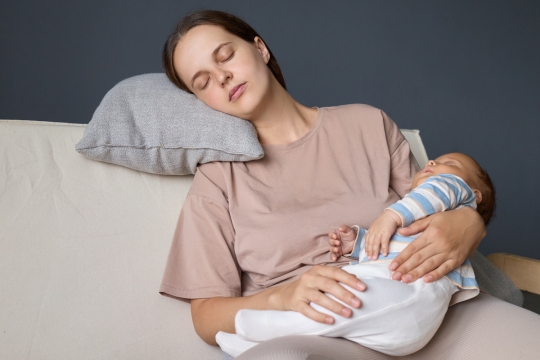
Getting restful sleep after a C-section can be difficult. You are recovering from major surgery, your scar might be sore, and you are adjusting to life with a newborn. Even though rest is essential for healing, actually getting comfortable at night is a real challenge for many mums.
Research shows that 67.2% of postnatal women experience poor sleep quality, with sleep disturbances being more common among those who have had a caesarean birth, compared to vaginal delivery. During pregnancy, that number is lower around 44.5%, highlighting how sleep can become more disrupted in the weeks after birth.
Through this blog, we bring together trusted NHS guidance, physiotherapy input, and expert maternity advice to help you rest easier and feel more supported during your C-section recovery.
Why rest matters after a C-section
A C-section is major abdominal surgery. Sleep gives your body the chance to heal - supporting tissue repair, reducing inflammation, and helping you manage pain more effectively. Even short naps throughout the day can help restore your energy and promote better recovery.
As the NHS advises, new mums should take it easy after a caesarean and prioritise rest during the healing stages.
Best sleeping positions after a C-section
You may need to experiment a little to find what’s most comfortable. Here are some sleeping positions that are widely recommended for comfort and safety after caesarean birth:
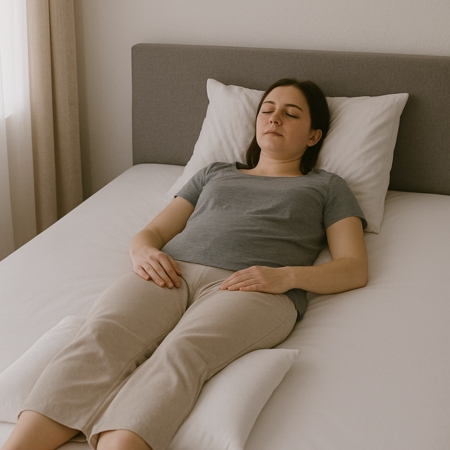
On your back with pillows under the knees
This position supports your spine and keeps pressure off your C-section scar. Placing a pillow under your knees can help ease tension in the lower back and abdomen.
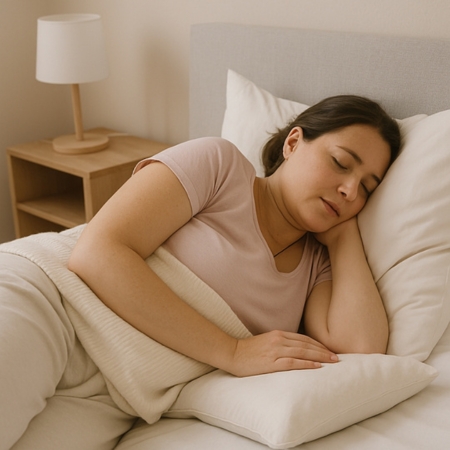
On your left side
Sleeping on your left helps improve blood flow and digestion. It’s gentle on your healing body, especially if you use a pillow between your knees for extra alignment and comfort. Also, this sleeping position is ideal for those with back and neck pain.
Reclined or Semi-upright
If lying flat feels uncomfortable, especially in the early days, try propping yourself up in bed with pillows or using a wedge cushion. This semi-reclined position can ease pressure on your abdomen and help if you are dealing with reflux, coughing, or breathing discomfort.
Some mums also find that sleeping upright in a recliner or supportive chair offers additional relief. It can help with mobility and make it easier to get in and out of bed, especially in the first few days post-surgery.
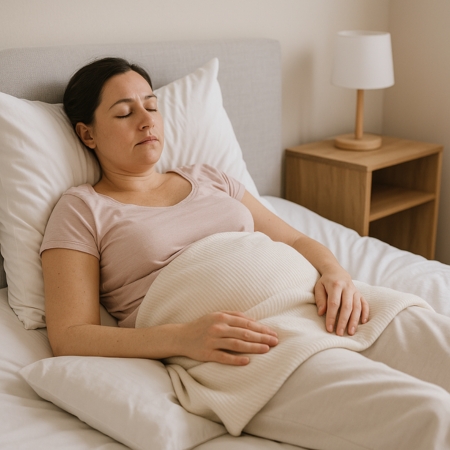
Some mums also find that sleeping upright in a recliner or supportive chair offers additional relief. It can help with mobility and make it easier to get in and out of bed, especially in the first few days post-surgery.
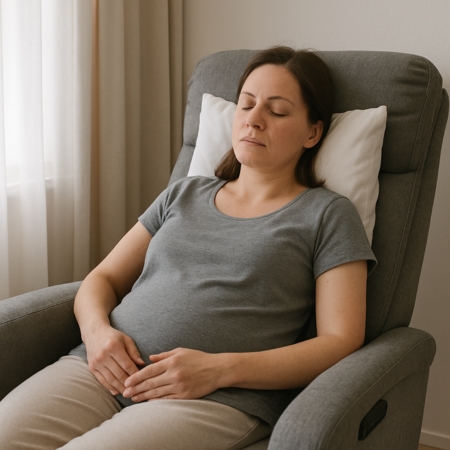
Quick facts
- In the postpartum period, sleeping or resting at 45° upper body elevation can improve respiratory safety and the severity of OSA by increasing upper airway cross-sectional area (CSA) (10). This position is also helpful in reducing the pressure on the incision.
- Avoid sleeping on your stomach until your incision is fully healed, as this can put pressure on the surgical site and delay your C-section recovery.
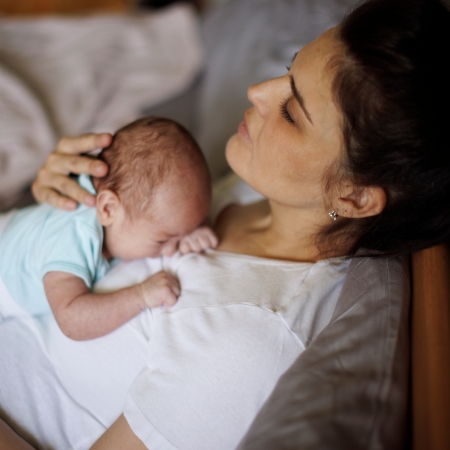
How to safely get in and out of bed
Protecting your abdominal muscles is key. Follow this NHS-endorsed method:
- Roll onto your side with knees bent.
- Slide your legs gently off the bed.
- Push yourself upright using your arms, not your core.
- Pull up your pelvic floor gently as you sit
This method also referred as “log roll”, prevents strain on your tummy and C-section scar.
Simple tips for better rest
Even short periods of sleep can be restorative. Here’s how to make sleep more manageable:
- Take pain relief regularly (as prescribed).
- Keep your bedroom dark, quiet, and cool.
- Use extra pillows for back, belly, or side support.
- Sleep when your baby sleeps. Every little bit helps.
- Ask for support at night when possible.
Extra tip: If your scar feels itchy or tight, applying a silicone sheet like Scarban C-Section, which can reduce irritation and improve comfort while you rest.
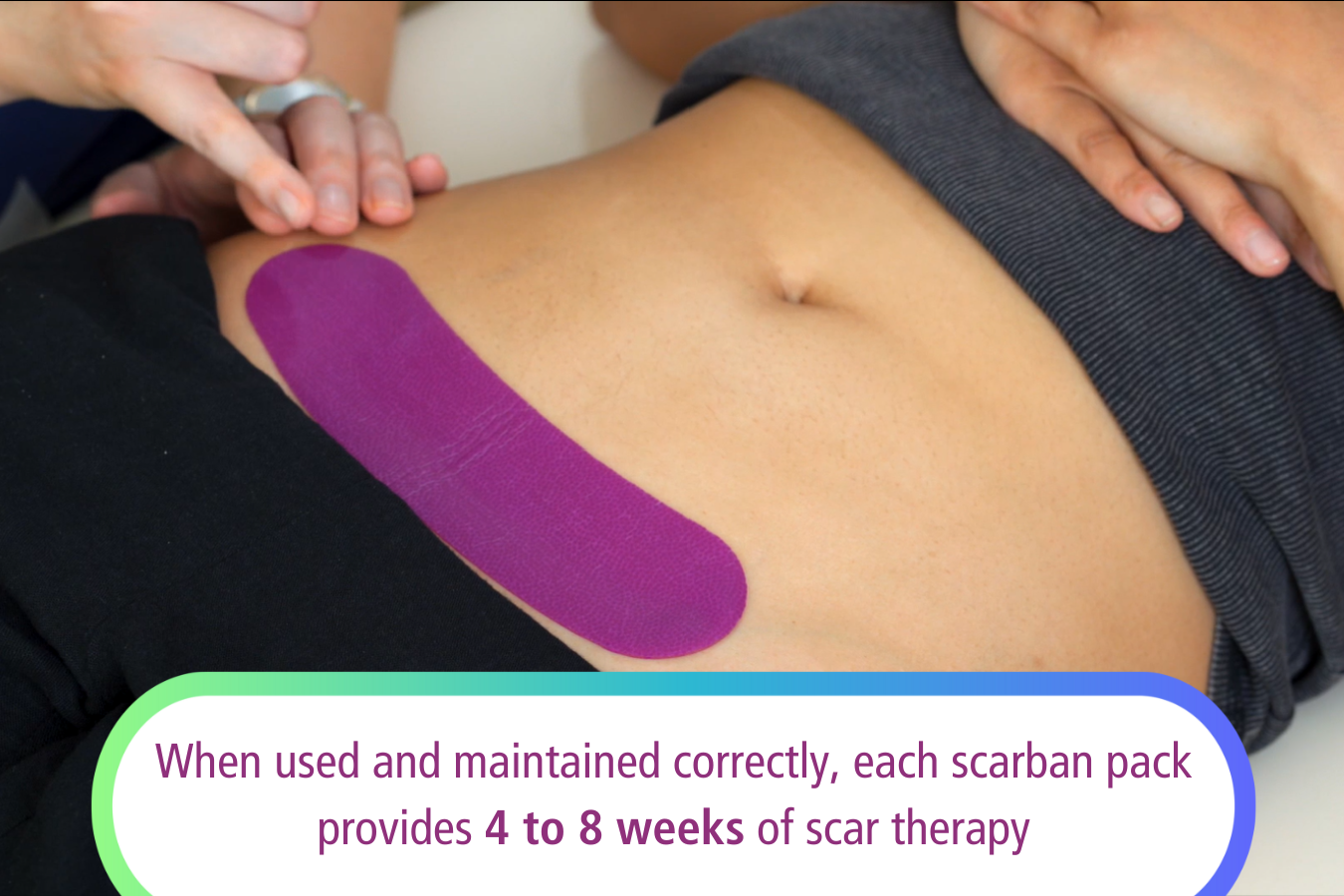
Sleep & scar healing go hand-in-hand
Sleep helps your body recover from the inside, while Scarban C-Section silicone sheets support healing from the outside. These soft, flexible, medical-grade silicone sheets help protect your scar overnight, reduce redness and itching, and safely improve the appearance of your scar. You can also subscribe to our free scar guide to learn more about how to care for your C-section scar.
Use only once the wound is fully closed, any scabs have disappeared, and stitches have been removed. Combining quality rest with proper scar care can help you feel better and heal faster. For more information on how to use your C-section silicone sheet, read our guide here.
Gentle movement matters too
You don’t need to stay in bed all day. According to Hertfordshire Community NHS Trust, short walks around your home can help improve blood circulation and support recovery. Just avoid twisting, lifting anything heavier than your baby, or strenuous movement in the first 6 - 8 weeks.
Final thoughts
C-section recovery takes time. Some nights will be easier than others. But with the right sleeping position, gentle routines, and support around you, rest is possible - and it plays a huge part in helping your body heal.
Take it one day at a time. You have already done something incredible.
References
- Hertfordshire Community NHS Trust. (2014). After your Caesarean Section: Physiotherapy Advice Leaflet. PDF link.
- C-Section UK. (n.d.). Best Recovery Sleeping Positions After a C-Section. Retrieved from https://csectionuk.com/blog/best-recovery-sleeping-positions-after-c-section
- MomJunction. (2024). 10 Best Sleeping Positions After C-Section & Tips To Sleep Better. Retrieved from https://www.momjunction.com/articles/sleeping-position-after-c-section_00469199
- Yang, Y., Li, W., Ma, T.-J., Zhang, L., Hall, B. J., Ungvari, G. S., & Xiang, Y.-T. (2020). Prevalence of Poor Sleep Quality in Perinatal and Postnatal Women: A Comprehensive Meta-Analysis of Observational Studies. Frontiers in Psychiatry, 11, 161. https://doi.org/10.3389/fpsyt.2020.00161
Disclaimer: The sleeping positions and advice shared in this article are for informational purposes only. They are not a substitute for professional medical advice. Always follow the guidance of your healthcare provider.