C-section healing stages
Healing after a C-section happens in stages. Your body needs time to recover, and your scar changes as you heal. This page explains what usually happens, step by step, from the first days to the months that follow. You will also learn how to support the process with clinically proven care.
Please note: Every body heals at its own pace. The suggested weeks are an estimate, only start using Scarban once your wound is fully closed and your health visitor confirms it is safe to do so.

What does the healing process after a C-section procedure involve?
Recovering from a C-section involves more than just resting. It’s a combination of physical healing, skin repair and emotional adjustment. Most women follow a similar timeline, but every recovery is personal. What matters is knowing what’s normal, what’s not, and how you can help your body along the way.
Week 1: Early healing and rest
In the first week, your body begins to repair the surgical incision. You may still have stitches or glue and it’s normal to feel sore or swollen. The wound might look red and some discharge can appear. Rest, keeping the area clean by rinsing it gently with plain water once the dressing is removed (no soap or oils), dry it carefully, avoiding baths and only letting water run over it in the shower. Avoiding pressure on the area is essential. This early stage is called the inflammation stage which is part of your body’s natural healing process.
Week 2 to 4: The scar starts to take shape
As the outer skin closes, the C-section scar becomes more visible. It might feel tight or itchy, and the colour may still look dark or bruised. These are typical signs of the skin entering the proliferative phase of healing, where tissue rebuilds and collagen forms. Gentle movement can help improve circulation and support recovery, but take care not to strain your wound.

Week 5 to 8: Strength returns, and scar care begins
By now, the scar will now be less painful, and the granulation tissue may begin to change as epithelial tissue forms. Some women may still feel slight pulling or sensitivity, but it’s generally milder than before. This is often the best time to start using silicone products, such as Scarban C-Section sheets. Its soft, medical-grade silicone layer helps maintain moisture and reduces tension on the scar.
Multiple clinical studies and guidelines recommend silicone scar sheets as the first-line, evidence-based option for preventing and treating hypertrophic and keloid scars.
Month 3 to 12: Long-term repair and scar maturity
In the following months, your body continues to rebuild deeper layers of tissue. The scar may become flatter and paler. Some women, especially those with darker skin tones or a history of thick scarring, may develop hypertrophic or keloid scars. These scars might feel itchy, raised, or tight.
Silicone therapy is recommended throughout this longer-term healing phase, especially for those at higher risk of abnormal scarring. Scarban creates a balanced environment that supports normal collagen alignment and reduces common complaints like pulling and tightness?

Treat your C-section scar with Scarban
How your C-section scar may look at each healing stage
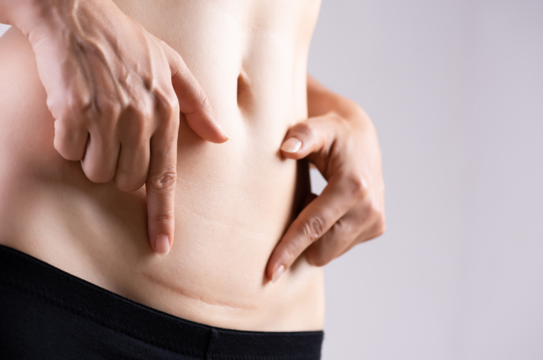
Many women want to know what’s normal when it comes to scar appearance. It’s common for a new scar to look raised, red or uneven in the beginning. Over time, most scars settle, becoming flatter, lighter, and better blended into your skin.
If you are looking at C-section scar pictures online, keep in mind that every scar heals differently based on your body, skin type, and care routine. If you’re unsure whether your scar is healing as expected, always ask your GP or health visitor for advice.
What should a healed C-section scar look like?
A healed scar is usually soft to the touch, flat, and pale pink or close to your skin tone. You might still notice mild numbness or tightness in the area, which can last for some time. These sensations are normal and part of the natural healing process.
How long does a C-section take to heal?
Many women feel stronger after six to eight weeks, but deeper healing continues well beyond that. The skin surface may recover first, but internal tissue and scar remodelling can take 3 to 12 months. In some cases, full scar maturation is a process of 12 to 18 months. This phase involves the slow reorganisation of collagen fibres in the scar. With rest, gentle movement, and silicone therapy, you can help your scar heal in the best possible way.
Do all skin types heal the same way?
Not always. People with darker skin tones may experience more pigmentation or raised scarring, while lighter skin often fades to pink or white. These differences result from natural variations in melanin and collagen response. Scarban C-Section is safe and effective for all skin types. Its protective silicone layer helps regulate hydration and reduces surface tension, which plays a key role in how a scar develops across skin tones.
How Scarban C-Section supports every stage of scar healing
Scarban C-Section is specially developed for post-surgical scars. It creates a semi-occlusive, breathable layer that protects and hydrates the skin. This helps reduce redness, itchiness and discomfort, while also making the scar more flexible and smoother. The latest scar management guidelines confirm that silicone therapy is the standard in non-invasive treatment. Using Scarban C-Section from the moment your wound closes lets you actively shape your scar’s appearance and comfort.
Learn everything about your scar and treatments options in the free scar guide!
Want more help with recovery?
Looking for a week-by-week overview of how your body recovers after a C-section and which activities are safe to resume at each stage? Read our blog: C-section recovery: A week-by-week guide for UK mums. It offers practical tips for rest, movement, emotional support and scar care throughout your healing journey.
✓ Proven effectiveness
✓ Relieves complaints such as itching and pain
✓ Trusted by professionals
Recommended C-section scar treatment
Scarban C-Section is trusted by scar specialists and midwives across the UK. Professionals such as Hannah Poulton (HLP Therapy) and Emma Holly (Restore Therapy) recommend Scarban’s medical-grade silicone sheets for supporting caesarean section scar healing.
Watch the video below, where scar specialist and C-section expert Hannah Poulton explains when you can start using silicone sheets.
References
- Anthonissen, M., Daly, D., Janssens, T., & Van den Kerckhove, E. (2016). The effects of conservative treatments on burn scars: A systematic review. Burns, 42(3), 508–518.
- Mustoe, T. A., Cooter, R. D., Gold, M. H., Hobbs, F. D. R., Ramelet, A. A., Shakespeare, P. G., ... & Téot, L. (2002). International clinical recommendations on scar management. Plastic and Reconstructive Surgery, 110(2), 560–571.
- Niessen, F. B., Spauwen, P. H. M., Schalkwijk, J., & Kon, M. (1999). On the nature of hypertrophic scars and keloids: A review. Plastic and Reconstructive Surgery, 104(5), 1435–1458.
- Middelkoop, E., Monstrey, S., & van der Horst, C. M. A. M. (2021). Textbook on scar management: State of the art management and emerging technologies. Springer.