
When can I put silicone on my C-section scar?
- Scarban C-Section
- 16 Feb 2026
-
views
2718
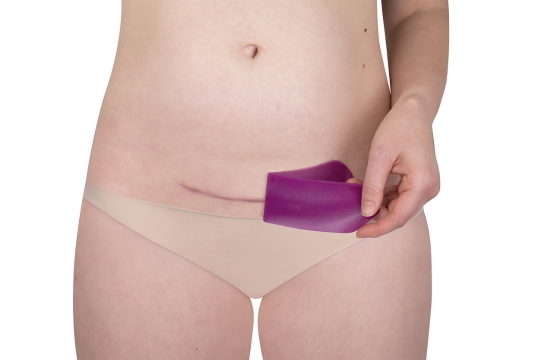
Recovering from a Caesarean section is a journey that takes time, patience, and the right aftercare. For many women, questions about scar healing come up early, especially around when to start using silicone products. Silicone sheets and gels are commonly used for scar care, but it’s important to start using them at the right time.
This guide explains when you can safely put silicone on a C-section scar, why timing is important, how silicone works, and how to use it as part of your C-section recovery. The information is based on clinical guidance and published medical evidence, with a focus on practical advice for mums in the UK.
Understanding how a C-section scar heals
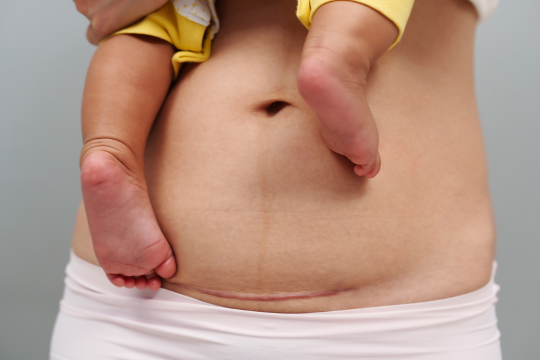
After surgery, a C-section scar goes through a normal healing process. In the first couple of weeks, the body focuses on closing the wound and preventing infection. Once the skin surface has fully closed, the scar then enters a longer phase where it gradually strengthens, softens, and changes in colour. You can read more about the different C-section scar healing stages here. Silicone scar treatments should only be introduced after the wound is fully closed.
When is it safe to start silicone scar treatment?
Silicone scar products should only be used once the incision has healed properly. You should only apply silicone when:
- The incision is completely closed
- There are no open areas or scabs
- There is no bleeding, fluid leakage, or weeping
- The skin shows no signs of infection such as increasing redness, heat, or discharge
If you had any wound complications, such as infection or delayed healing, you may need to wait longer. When in doubt, it is always best to check with your healthcare professional before starting silicone treatment.
Why timing matters with silicone scar treatment
Silicone should never be applied to open wounds. After a deeper incision, the outer skin layer (epidermis) needs time to regenerate. Research shows that in the very early phase of wound healing; scar interventions may have limited effect because collagen activity is part of normal wound repair. Once the skin surface has healed and the new skin barrier is forming, silicone therapy can support healthier scar development by helping to normalise moisture levels at the scar site.
Once the wound is closed, however, silicone can support the healing process by creating an optimal environment for scar formation. Research shows that early intervention with silicone, after wound closure, can help reduce the risk of hypertrophic and keloid scars.
How does silicone help a C-section scar?
Silicone is considered the gold standard in topical scar management and is widely recommended by dermatologists, surgeons, and international scar management guidelines.
Findings from clinical and experimental research show that silicone therapy provides a semi-occlusive (covering) layer on top of the skin, which results in increased hydration of the skin. This supports healthy scar formation.
Hydration and barrier function
Newly healed skin can lose moisture more easily. When a scar becomes too dry, the skin may respond by producing more collagen, which can contribute to raised or uncomfortable scars. By helping the skin retain moisture, silicone supports a calmer healing environment and helps the scar stay softer and more comfortable.
Regulation of collagen and scar activity
Studies suggest that silicone therapy may influence signalling between skin cells involved in scar formation. By restoring a more normal hydration state, silicone can help regulate fibroblast activity and collagen production, reducing the risk of hypertrophic scarring.
Reduction in redness and discomfort
Clinical evidence shows that silicone therapy can significantly reduce symptoms such as redness, itching, pain, and tightness. These symptomatic improvements are often noticed before visible changes in the scar’s appearance.
Protection from friction
Silicone sheets also provide a protective physical barrier. For C-section scars, this helps reduce irritation from clothing waistbands and underwear, which can otherwise contribute to discomfort and prolonged inflammation.
Should I choose silicone gel or a silicone sheet for a C-section scar?
Both silicone gel and silicone sheets are clinically proven options for scar management. However, the most suitable choice often depends on the size and location of the scar.
Silicone gel
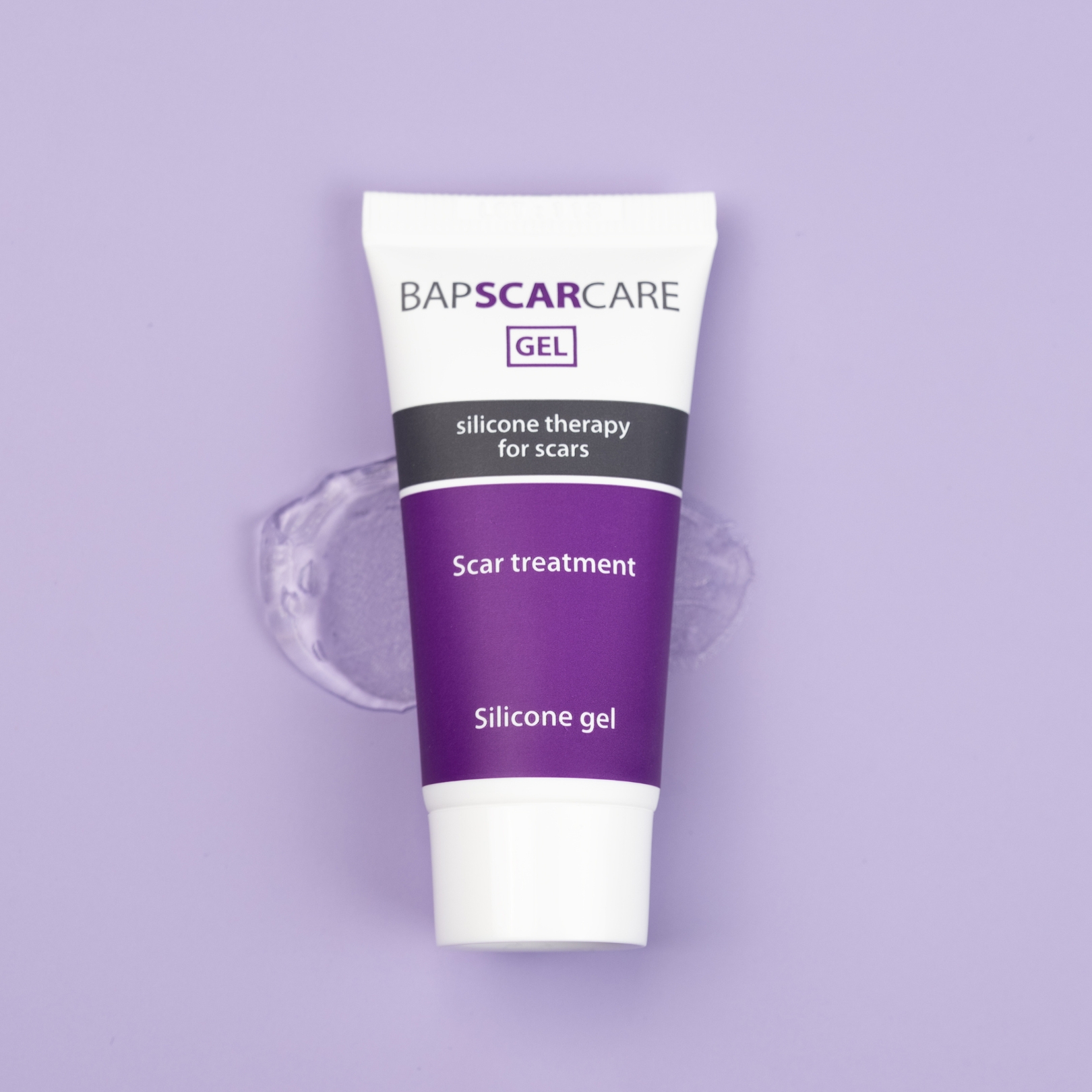
We usually recommended silicone gel for small scars or areas that are visible and not covered by clothing, such as the face, neck, or hands.
Why silicone gel works well for smaller scars:
- Dries clear and is barely visible once applied
- Convenient for exposed areas
- Easy to reapply throughout the day
Silicone sheets
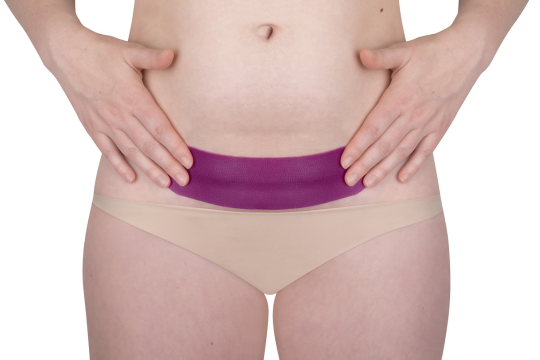
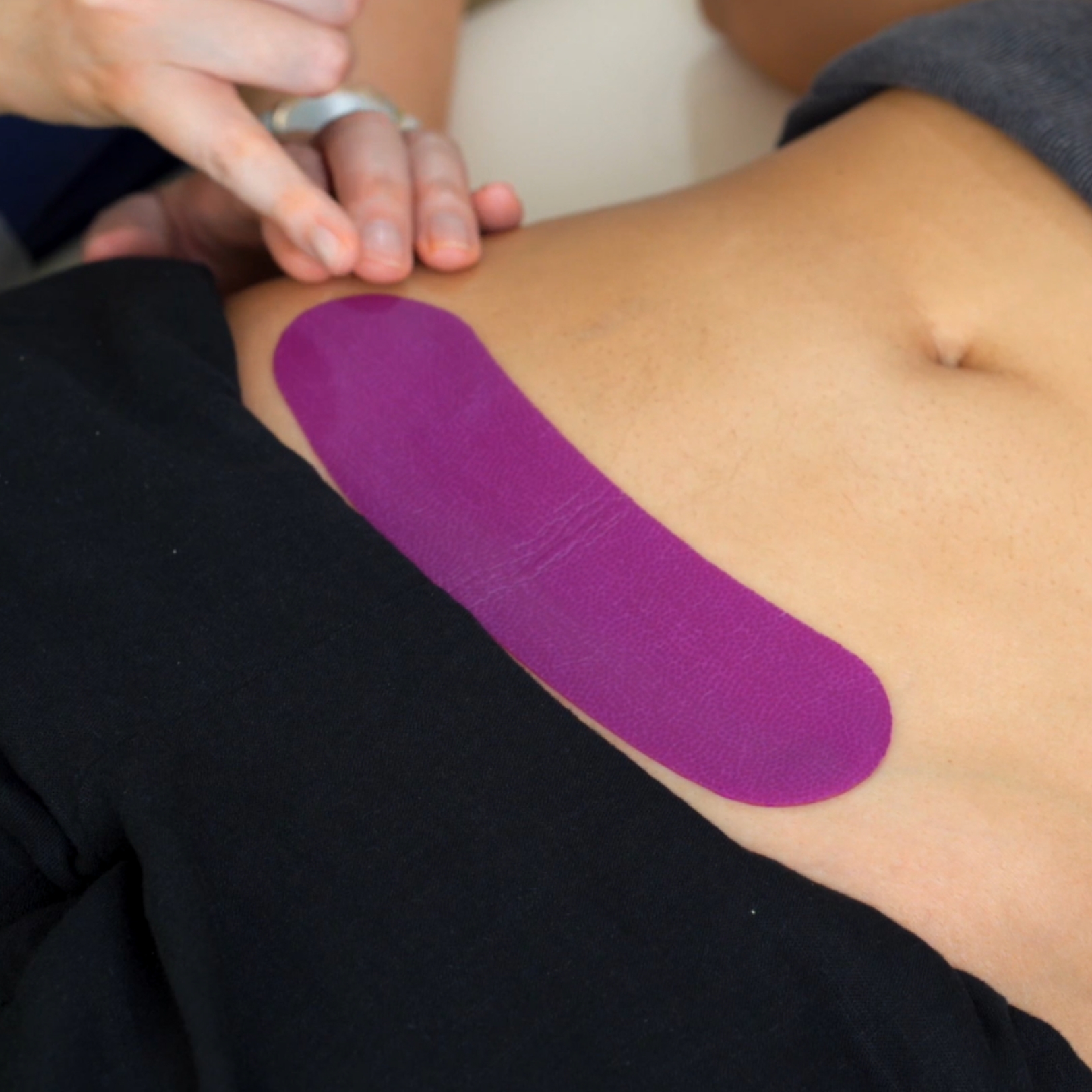
For larger scars, such as a C-section scar on the lower abdomen, silicone sheets are generally the preferred option. Silicone sheets cover the whole length of the scar and stay in place, which means the scar is in constant contact with silicone. This helps keep the area hydrated, protects it from rubbing against underwear or waistbands, and supports more even healing across the scar.
Because C-section scars sit in an area that moves and stretches, silicone sheets can also help by spreading some of that tension away from the scar itself. They are designed to be removed and reapplied gently, which helps protect the newly healed skin during the early stages of scar maturation. Clinical studies have shown that silicone sheets are particularly effective for post-surgical scars when worn for longer periods, which is why they are commonly recommended for C-section scars.
How long should I use silicone on a C-section scar?
Most clinical guidelines recommend using silicone products for at least 2 to 3 months, and often longer. For C-section scars, many women benefit from using silicone for 3 to 6 months, particularly if they are prone to raised or thickened scars.
If the scar remains red, raised, or uncomfortable, continue use may be helpful. If silicone therapy does not seem to help or the scar develops further e.g. becomes larger and more complaints than the client should visit a physician. Sometimes silicone therapy does not work and additional therapy like injections might be necessary. Scar maturation can take up to 5 years, and improvements can still occur with ongoing care. For full guidance on correct application and care for your Scarban C-section, you can read more about the instructions for use here.
Can silicone be used with other scar treatments?
Yes, it can, but it’s important to use products in the right way. What we generally recommend is using ALHYDRAN together with Scarban C-section silicone sheets. ALHYDRAN is a medical hydrating cream that helps hydrate the scar area, improve skin elasticity, and reduce feelings of tightness or discomfort.
After removing the Scarban silicone sheet, applying ALHYDRAN can help keep the scar moisturised and support ongoing healing. Always make sure the scar area is clean and dry before applying ALHYDRAN. Read more about this combination and how to use ALHYDRAN and Scarban C-Section together.
Silicone scar treatment can also be combined with gentle C-section scar massage once the wound has healed. Scar massage may help reduce tightness and improve comfort by keeping the scar and surrounding tissue more flexible. Silicone products are usually applied after massage to help maintain hydration. You can read more about scar massage and how to get started safely here:
Can everyone use silicone after a C-section?
Silicone is generally well tolerated and suitable for most skin types, including sensitive skin. It is non-invasive and does not contain active pharmaceutical ingredients.
Women with a history of hypertrophic or keloid scars may particularly benefit from early silicone use once the wound has healed.
Final thoughts
So, when can you put silicone on a C-section scar?
You can start using silicone scar sheets after the wound has completely closed, the stitches have been removed, and any scabs have disappeared. Starting silicone at the right time can support healthy scar formation, improve comfort, and help the scar mature more smoothly over time.
Every C-section recovery is different, and there is no single timeline that suits everyone. Paying attention to how your scar is healing and following advice from your healthcare professional can help you decide when it feels right to start scar care.
Your free guide to scar care and recovery
Learn everything about your scar and treatments options in the free scar guide!
References
- Gold, M.H., McGuire, M., Mustoe, T.A., et al. (2014). Updated international clinical recommendations on scar management. Dermatologic Surgery, 40(8), 817–824.
- O’Brien, L., & Jones, D.J. (2013). Silicone gel sheeting for preventing and treating hypertrophic and keloid scars. Cochrane Database of Systematic Reviews, Issue 9.
- Mustoe, T.A., Cooter, R.D., Gold, M.H., et al. (2002). International clinical recommendations on scar management. Plastic and Reconstructive Surgery, 110(2), 560–571.
- NHS. (2023). Caesarean section recovery. NHS.UK.
- British Association of Dermatologists. (2022). Scar management patient information leaflet.
- Bleasdale, B., Finnegan, S., Murray, K., Kelly, S., & Percival, S.L. (2015). The use of silicone adhesives for scar reduction. Advances in Wound Care, 4(7), 422–430.